Mosquito mitigation across Pulaski County requires precise botanical delivery rather than indiscriminate aerial fogging. In older established neighborhoods like The Heights, Hillcrest, and Cammack Village, mature oak…
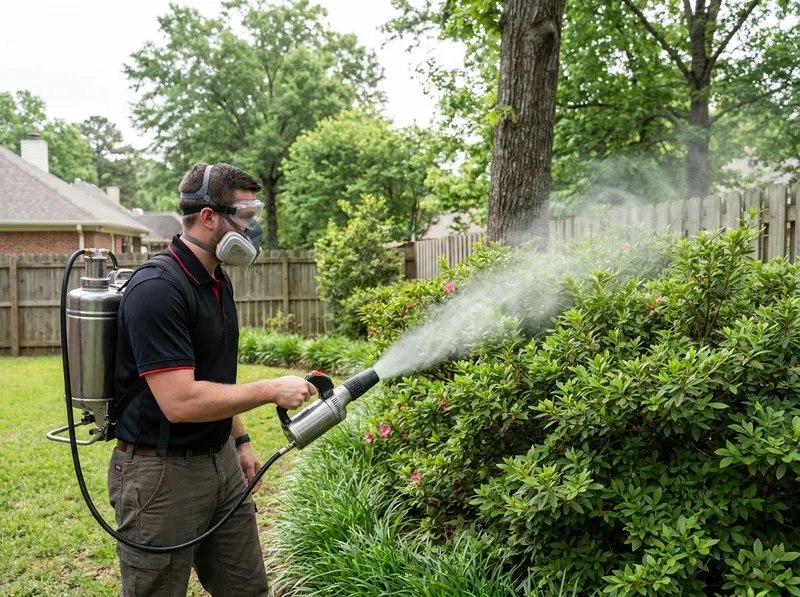
Mosquito mitigation across Pulaski County requires precise botanical delivery rather than indiscriminate aerial fogging. In older established neighborhoods like The Heights, Hillcrest, and Cammack Village, mature oak and hickory canopies produce shaded, high-humidity microclimates where adult mosquitoes congregate along the undersides of leaves during peak solar heat. Technicians utilize backpack mist blowers calibrated to 50 to 100 microns, applying polymer-bonded micro-encapsulated residual formulations directly to the lower leaf surfaces of ornamentals, low-hanging limbs, groundcover ivy, and fence lines. Once dry, typically within 30 to 45 minutes, the encapsulated active ingredient bonds to leaf surfaces, resisting degradation from dew and light rainfall to deliver residual mortality over 21 to 30 days.
Properties bordering natural drainage basins and creeks, such as homes along Boyle Park, Rock Creek, or the foothills near Pinnacle Mountain State Park, face elevated immersion pressure from standing runoff. For these environments, adulticide foliage misting alone is insufficient; standing water sources receive non-toxic bacterial larvicide treatments using Bacillus thuringiensis israelensis (Bti). Bti selectively targets mosquito larvae in drainage catch basins, bird baths, and gutter systems without impacting beneficial non-target organisms, pollinators, or family pets. In master-planned developments across Chenal Valley and Midtown, common retention ponds and irrigation runoff sites receive continuous residual larvicide dunks that prevent pupation for up to 30 days.
Decision-fit relies on site exposure and vegetative density. Properties surrounded by dense, untreated woods require 21-day continuous containment cycles to establish a protective defensive perimeter against prevailing wind drift. Conversely, sun-exposed properties with low tree cover in Capitol View or Broadmoor frequently achieve balance through monthly applications paired with mechanical source removal, such as clearing blocked gutters and altering irrigation timing to eliminate pooled water. This protocol prioritizes diagnostic habitat remediation over broad, continuous spraying, delivering definitive yard stabilization while maintaining household safety.
Every job gets a firm, written price after a free on-site visit.
Tell us about your mosquito reduction & foliage mist application job in Little Rock and we'll send a clear, written quote, usually the same day.
 Brevon Bug Specialists