Brown recluse infestations in Pulaski County concentrate inside structural dead spaces rather than on exposed interior surfaces. In older craftsman construction found throughout Hillcrest, Stifft Station, and Capitol…
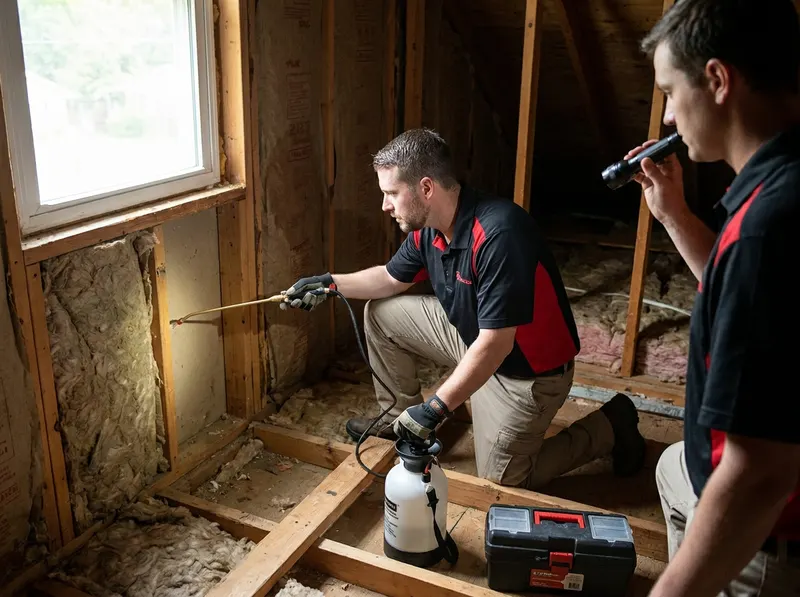
Brown recluse infestations in Pulaski County concentrate inside structural dead spaces rather than on exposed interior surfaces. In older craftsman construction found throughout Hillcrest, Stifft Station, and Capitol View, tongue-and-groove subfloors, balloon framing, and settled cellulose insulation provide extensive undisturbed harborage. Modern builds across Chenal Valley and Rock Creek feature expansive multistory attic voids, complex roof hips, and spray-foam gaps where *Loxosceles reclusa* establish breeding populations away from standard baseboard liquid barriers.
Standard liquid pyrethroid applications fail against brown recluse populations because the species walks with elevated tarsi, minimizing contact with dried surface deposits. Systematic harborage remediation shifts the protocol to direct environmental modification: removing wall outlet covers, mechanically injecting non-repellent silica dust formulations into plumbing penetrations, and dusting attic perimeters beneath thermal insulation. This dry-void treatment mechanism penetrates deep architectural voids, clinging directly to the spider's epicuticle to disrupt moisture retention within 48 to 72 hours.
Physical harborage exclusion seals off the migration pathways between dead space voids and finished living areas. In crawlspace-heavy properties near Boyle Park, Broadmoor, and Cammack Village, technicians install structural mesh over foundation vents, gasket plumbing penetrations under subfloors, and replace torn crawlspace vapor barriers. This systematic reduction in interior access points eliminates migration pathways into sleeping quarters and closets without binding homeowners to recurring monthly service contracts.
Remediation timing requires distinct staging based on seasonal biological activity. Spring and mid-summer interventions intercept mobile male spiders searching for mates through central heating ducts and hollow interior doors. Winter protocols focus on deep attic insulation raking and vacuum extraction in dead storage zones. For properties in The Heights and Midtown, addressing cardboard storage boxes, structural ceiling transitions, and framing interfaces permanently removes the dry, dark microclimates necessary for secondary colonization.
Every job gets a firm, written price after a free on-site visit.
Tell us about your brown recluse void & harborage remediation job in Little Rock and we'll send a clear, written quote, usually the same day.
 Brevon Bug Specialists