Securing a decisive pest control service Little Rock homeowners rely on stops active biological damage before structural timbers or indoor sanitary boundaries fail. Technicians deploy targeted physical exclusion barriers and non-repellent liquid termiticides directly along subterranean entry pathways near the Arkansas River basin.
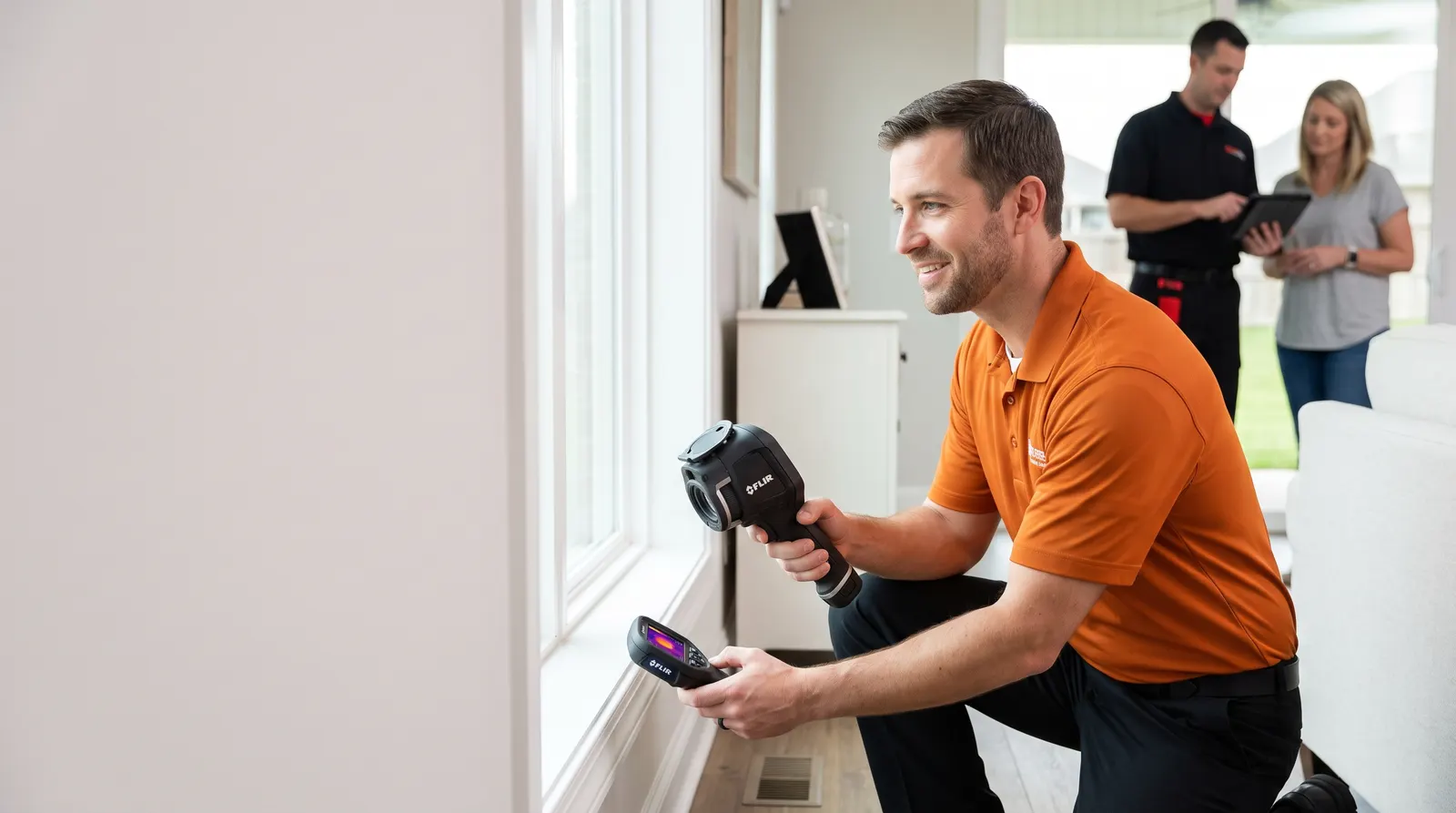
A professional pest control service company in Little Rock is an on-site structural remediation provider that identifies, eliminates, and chemically or physically excludes biological pests from residential structures throughout Pulaski County.
Every service reflects the same meticulous attention to detail, whether it's a single job or a larger pest control sevice project across Little Rock.
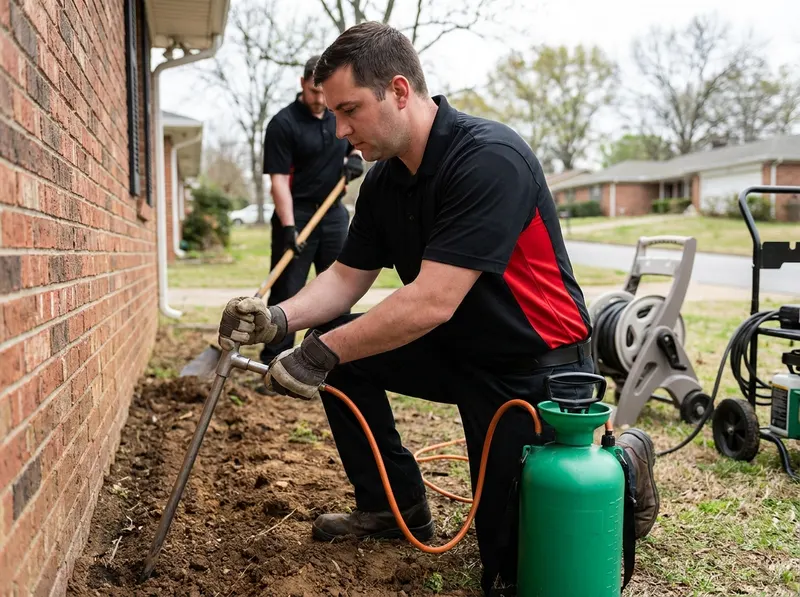
Subterranean termite control involves systematic trenching and rodding around crawl spaces, slab perimeters, and foundation footings throughout Little Rock. Technicians excavate continuous trenches measuring six inches wide by six inches deep, saturating backfilled soil with non-repellent termiticide solutions at a calculated rate of four gallons per ten linear feet. Foraging workers unknowingly track the undetectable active chemistry through earthen passages directly back to subterranean royal chambers. Masonry crawl space piers, foundation stem walls, and structural plumbing penetrations receive high-pressure sub-slab injection to establish an unbroken chemical containment zone. Active earthen mud tubes along interior masonry footings are mechanically scraped and documented to verify complete colony isolation from joist framing.
Get a quote →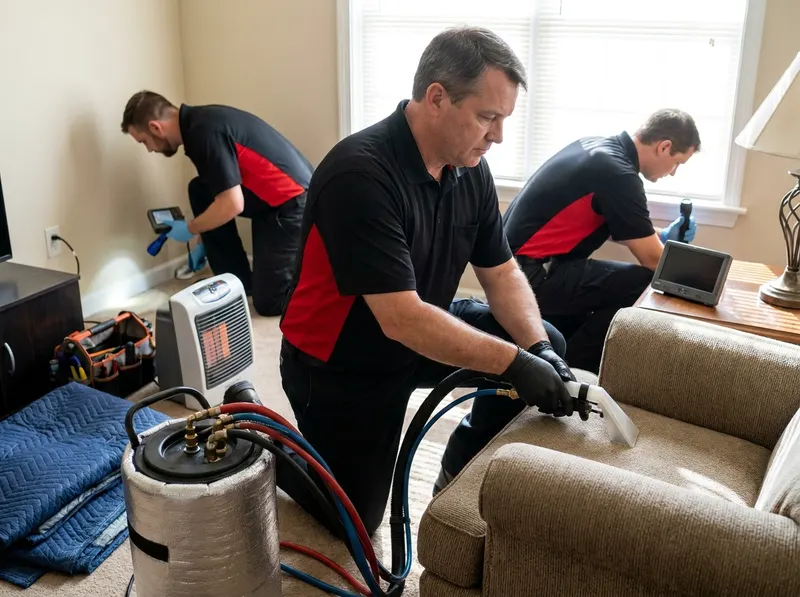
Bed bug remediation targets hidden nesting zones within mattress seams, baseboard channels, wall outlet boxes, and structural subflooring across multi-story residences. Applications deploy targeted juvenile hormone mimics and non-staining contact insect growth regulators that disrupt reproductive life cycles and prevent immature nymphs from completing developmental molting stages. Field technicians dismantle affected bed frames, nightstands, and headboards to treat hidden harborage seams directly with micro-fine desiccant dusts that erode insect epicuticles without airborne dispersion. Post-treatment containment relies on high-grade active mattress encasements combined with floor-mounted monitoring interceptors to verify total eradication across successive biological hatching cycles over a thirty-day observational period.
Get a quote →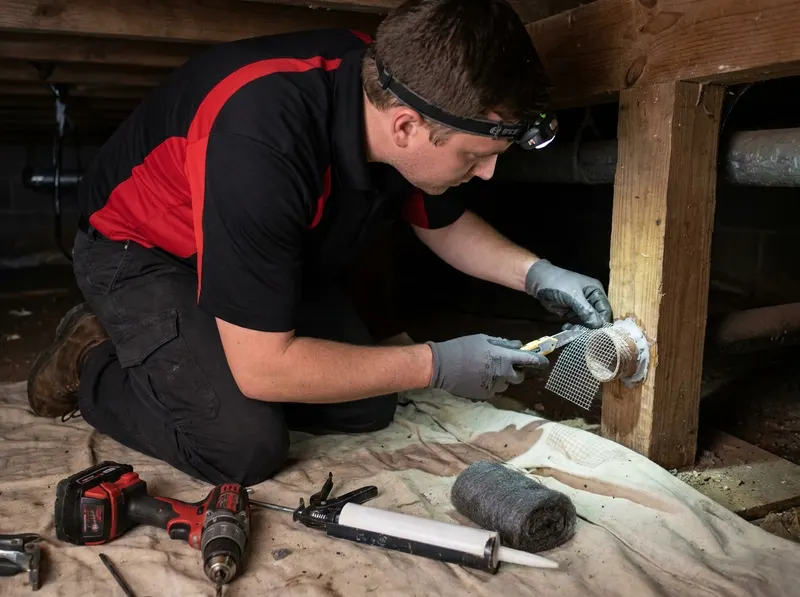
Rodent exclusion blocks roof rats, Norway rats, and house mice from entering foundation vents, pipe chases, and roof returns. Technicians seal all architectural gaps measuring one-quarter inch or larger using copper mesh, structural mortar, and galvanized twenty-gauge steel hardware cloth. Crawl space vent screens are mechanically reinforced, utility sill plates are enclosed, and roof eaves receive custom metal flashing transitions to deny biological entry. Interior residential populations are systematically removed through non-toxic mechanical snap traps and multi-catch containment systems positioned along dark perimeter travel paths, avoiding the health hazards and decomposition odors caused by loose, off-label rodenticide baits placed inside living areas.
Get a quote →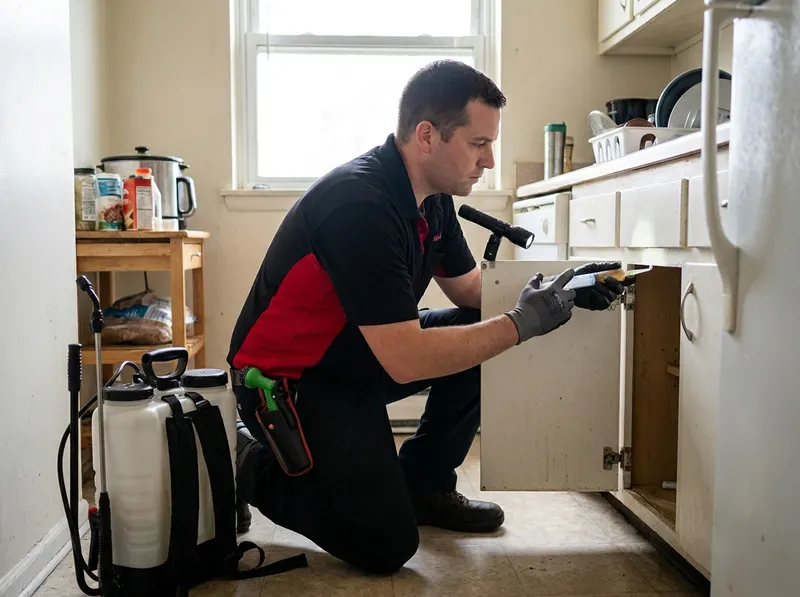
German cockroach cleanouts address heavy indoor harborages situated behind kitchen cabinetry, warm appliance motors, and plumbing utility penetrations. Specialized bait matrixes containing fipronil or indoxacarb are deployed in microscopic micro-dots directly inside active movement seams, avoiding food prep surfaces and dining zones entirely. High-potency insect growth regulators such as pyriproxyfen prevent reproducing adult females from dropping viable egg capsules (oothecae) and cause structural chitin deformations in juvenile nymphs. Structural kick-plates under dishwashers and void spaces beneath kitchen sinks are vacuumed with HEPA filtration tools to eliminate frass, allergen particles, and dead biological material before active baits are sealed into position.
Get a quote →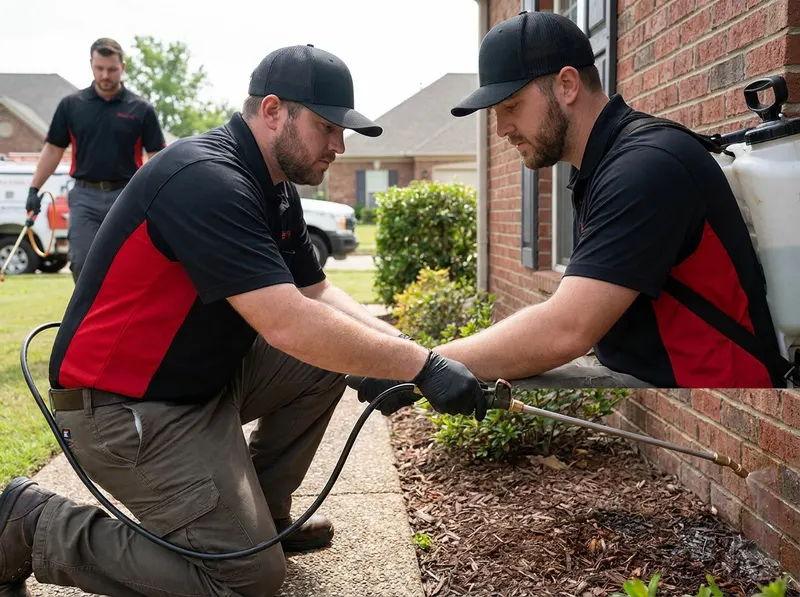
Perimeter insect defense establishes a three-foot vertical and six-foot horizontal exterior boundary along exterior masonry, doorways, crawl access doors, and patio margins. Microencapsulated residual formulations bond securely to concrete, brick, and natural stone, repelling ants, earwigs, centipedes, and silverfish before interior access occurs. Field specialists mechanically treat outdoor expansion joints, weep holes, and exterior electrical conduits with non-staining water-resistant dusts. The protective perimeter barrier maintains residual chemical stability through heavy summer precipitation and high ambient humidity, stopping crawling arthropods at exterior structural thresholds and preventing indoor seasonal migrations without requiring interior broadcast sprays.
Get a quote →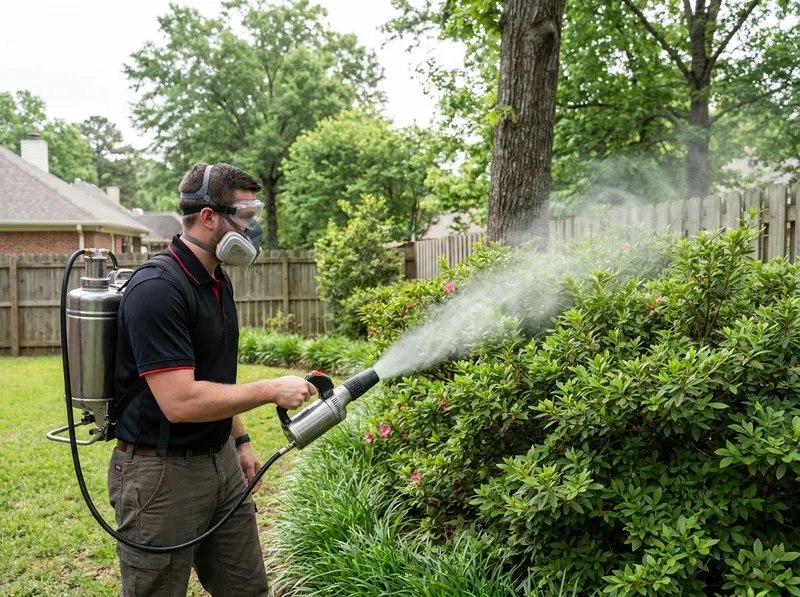
Mosquito management focuses on exterior resting vegetation, shaded structural eaves, and dense shrubbery where adult mosquitoes seek shelter during midday heat. Targeted backpack misting reaches the underside of broad-leaf foliage using adulticides combined with synthetic pyrethroids that adhere to ornamental leaves without damaging landscaping. Standing water sites on residential properties, including blocked roof gutters, shaded landscape basins, and low-lying perimeter drainage ditches, receive targeted biological larvicides containing Bacillus thuringiensis israelensis (BTI). This specialized biological ring disrupts larval mosquito development before wrigglers pupate into biting adults, significantly lowering yard biting pressure throughout humid Pulaski County summers.
Get a quote →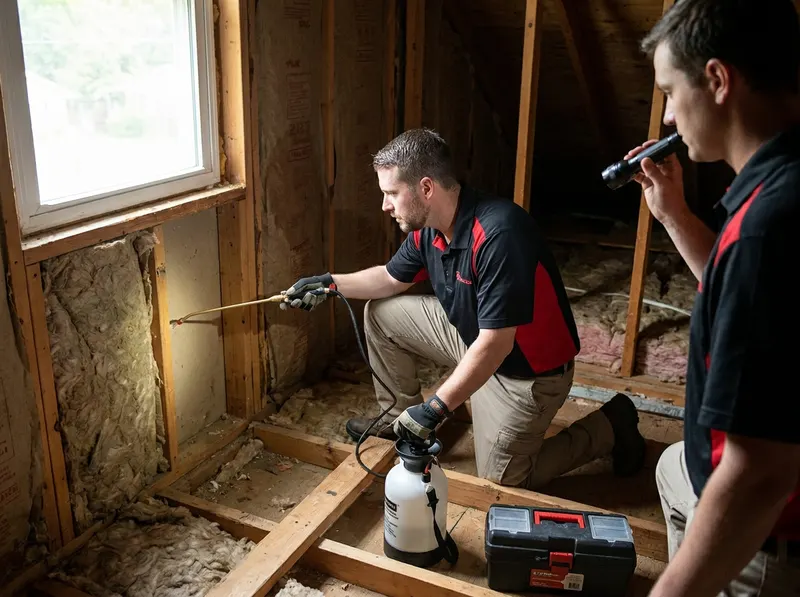
Brown recluse spider protocols remediate unconditioned attics, drop-ceiling spaces, wall voids, and dry storage closets. Specialists introduce non-staining micro-dust insecticides into concealed sheetrock cavities using pressurized electric delivery tools to coat hidden webbing zones and structural framing voids. Crawl spaces and uninsulated attic rafters receive targeted void injections that settle onto hidden floor joist plates where brown recluses establish daytime hunting caches. Sticky monitoring arrays positioned at structural transition junctions, closet baseboards, and HVAC return ducts track population containment over thirty-day post-treatment intervals, ensuring complete biological clearing of interior spaces.
Get a quote →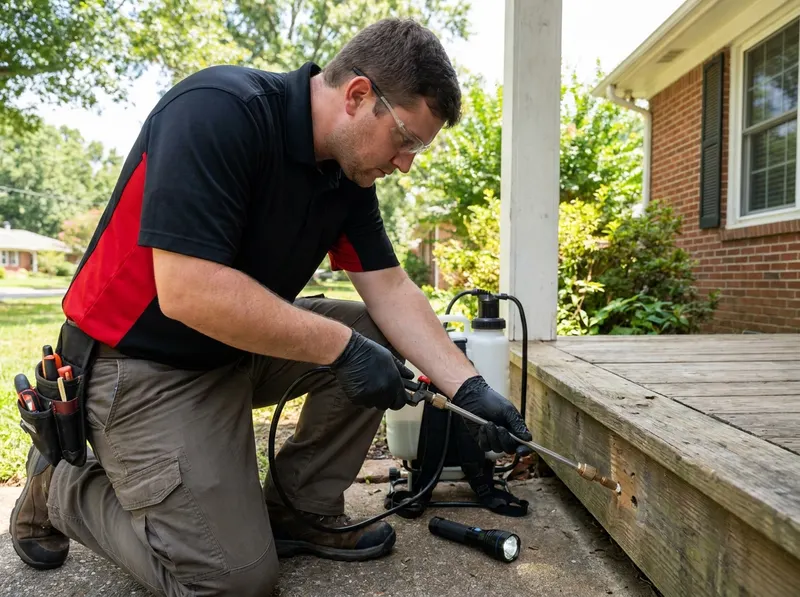
Carpenter ant management addresses satellite nesting sites located within moisture-compromised window frames, chimney step flashing, and bathroom subfloors. Non-repellent transfer insecticides target exterior foraging trails along roof branches, brick perimeters, and foundation siding, allowing foraging worker ants to distribute active chemistry directly to the parent queen without triggering colony dispersal. Damaged structural void cavities are identified through acoustic wood tapping and moisture meters for immediate targeted dust injection. Technicians provide clear architectural recommendations to eliminate exterior moisture leaks, trim contacting tree branches, and seal damp wall cavities that supply carpenter ants with sustainable wood-nesting environments.
Get a quote →You get a firm, itemized quote for your pest control sevice before any work begins, no surprises, no pressure.
Careful prep, tidy work, and a full cleanup when we are done. We treat your home and belongings like our own.
The same trusted, background-checked team from the first call to the final check.
Selecting appropriate intervention protocols depends directly on the biological profile and structural location of the infestation. If structural foundation wood shows hollowed grain patterns or subterranean earthen shelter channels, select liquid non-repellent barrier trenching rather than surface baiting. Liquid termiticides provide an immediate subterranean chemical boundary around crawl space piers, while bait stations require several months for worker ingestion and subsequent colony transmission; the trade-off centers on upfront soil disruption versus extended colony eradication latency.
If indoor spaces show localized infestations of bed bugs or German cockroaches, select targeted crack-and-crevice insect growth regulator protocols over broad room fogging. Precision application isolates active harborages within baseboards and wall voids without driving pests deeper into adjacent wall cavities, trading rapid total-room broadcast coverage for permanent containment. For perimeter rodent issues, select exterior physical exclusion accompanied by mechanical containment instead of open broadcast rodenticides.
Physical exclusion seals crawl space penetrations permanently with heavy-gauge steel hardware cloth, preventing indoor mortality and subsequent odor complications, with the trade-off being higher upfront labor for structural sealing compared to disposable poison bait placement. When managing wood-boring powderpost beetles in damp subflooring, choose direct borate timber saturation instead of general space fumigation. Borate crystallizes within cellulose fibers to permanently prevent larval digestion, though it requires dry structural lumber surfaces with moisture contents below 20 percent to achieve optimal depth penetration.
Every project gets a firm, written price after a free on-site visit. Ranges below for orientation.
Tell us about your pest control sevice job and we'll send a clear, written quote, usually the same day. Or just call and talk to a real Little Rock pro.
(327) 202-3620
Little Rock's geographic setting along the Arkansas River basin creates elevated humidity zones and heavy alluvial clay soils that place substantial hydrostatic pressure on residential foundations from Midtown to Chenal Valley. Expansive clay soils shrink during hot, dry summer stretches and expand rapidly following torrential spring rainstorms, developing foundation stem wall fractures through which subterranean termites travel via protected earthen mud tubes. Historic raised-pier homes throughout Hillcrest, The Heights, and Stifft Station feature open crawl spaces that expose untreated heart-pine framing directly to high ambient moisture and wood-destroying subterranean pests. Mature canopy trees lining Cantrell Road, Markham Street, and University Avenue provide direct overhead highways for roof rats and carpenter ants, which access attic soffits and chimney flashings from overhanging limbs. In suburban developments near Boyle Park, Rock Creek, and Pinnacle Mountain State Park, dense woodland interfaces elevate encounters with brown recluse spiders, lone star ticks, and field mice migrating into climate-controlled residential basements when late-autumn temperatures fall across Pulaski County.
Free estimates for Little Rock & the surrounding area.
 Brevon Bug Specialists